

Your desk has become a black hole. Sticky notes pile up, cables snake into impossible tangles, and that single pen you needed five minutes ago is now buried under three weeks of receipts. This daily chaos isn’t just annoying; it actively kills your focus and drains your energy before you even start working. The solution isn’t to “try harder” to be tidy. The real fix lies in choosing the right desk organizers workspace organization tools that match how you actually work, not how you wish you worked. This guide cuts through the noise, helping you select smart, affordable solutions that create a workspace that stays calm, functional, and ready for action.
What Exactly Makes a Desk Organizer “Good” vs. Just “Cheap”?
A good desk organizer solves a real problem without creating new ones. Cheap organizers often collapse under weight, tip over easily, or hold so little that your clutter just migrates to a different spot. A quality piece, however, considers material, stability, and purpose.
Look for organizers made from sturdy materials like metal, solid bamboo, or thick, reinforced plastic. A good test is to fill the organizer with your heaviest items (stapler, calculator, water bottle) and see if the base bows or the unit wobbles. If it does, move on. The best value comes from organizers that offer a specific place for everything you use daily, preventing the “junk drawer” effect on your desktop.
Material Matters: Choosing Between Wood, Metal, and Plastic
- Wood (Bamboo): Looks professional and is heavy enough to stay put. Great for a warm, natural aesthetic. Bamboo is highly durable and sustainable, making it a top choice for long-term use.
- Metal: Sleek, modern, and incredibly strong. Often powder-coated to resist scratches. Excellent for heavy-duty items like bookends or monitor stands.
- Plastic: Lightweight and cheap, but it can warp or crack over time. Best for temporary setups or very light items like paperclips and sticky notes.
Why Does Your Current Desk Feel So Cluttered?
Clutter usually happens because items lack a designated “home.” When you finish using a pen, a charger, or a notepad, you place it wherever there is empty space. This random placement creates visual chaos. Your brain has to process this mess constantly, leading to decision fatigue.
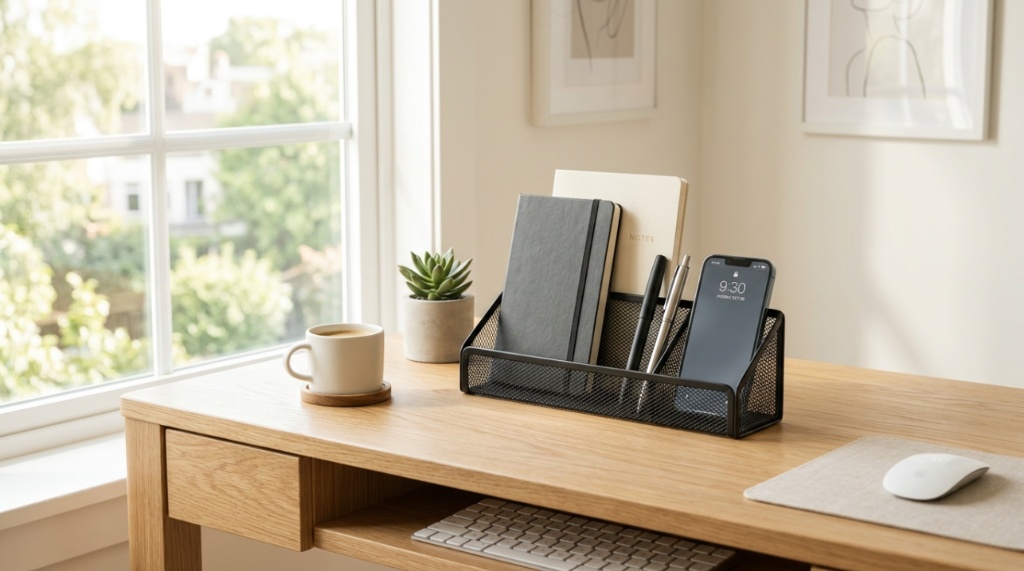
The psychological impact is significant. A cluttered desk signals to your brain that there is unfinished work everywhere. This increases cortisol (stress hormone) levels and reduces your ability to focus on a single task. Organizers solve this by creating visual boundaries. When a pen tray is full, you see it. When a file holder is empty, you know where to put incoming papers. It turns chaos into a simple system.
How Do You Determine Exactly Which Organizers You Need?
Start with a desk audit. Take everything off your desk. Now, sort it into three piles: Daily Use, Weekly Use, and Storage.
- Daily Use Items: These need to be within arm’s reach. Pen, phone, water mug, notepad, mouse.
- Weekly Use Items: Stapler, hole punch, calculator, cables. These need a nearby drawer or a small caddy.
- Storage Items: Items you use once a month or less (extra stationery, old chargers, reference documents). These belong in a drawer or filing cabinet, not on your desk.
Now, measure your desk. You need white space for your keyboard and mouse. An organizer that takes up 40% of your desk is a failure. The goal is to contain the Daily Use items only. This simple reduction instantly creates a cleaner workspace.
What Types of Desk Organizers Solve the Most Common Problems?
Different work styles require different tools. Below is a breakdown of the most effective organizer types and what problems they fix.
Your desk drawer is likely a disaster zone. Drawer organizers are small trays that segment your drawer into compartments. They turn a dark pit of tangled cables and lonely pens into a neatly ordered grid. They are often the most affordable upgrade you can make because they hide the mess while making it easy to find things.
Vertical File Sorter for Paper Piles
If your desk is covered in stacks of paper, a vertical file sorter is non-negotiable. It uses vertical space to keep documents upright. This prevents piles from growing and toppling over. Label the slots “To-Do,” “To-File,” and “To-Read.” This system forces you to categorize papers immediately, reducing the temptation to just stack them.
Monitor Riser for Dual-Purpose Space
A monitor riser elevates your screen to eye level (good for your neck) and creates hidden storage underneath. You can stash your keyboard, a small notepad, or your phone under it. This is a masterstroke of desk organizers workspace organization because it uses empty airspace without taking up surface area.
Cable Management Box for the Tangled Mess
Cables are the most frustrating clutter of all. A cable management box hide power strips and excess wire length. It clips onto the back or side of your desk. This one tool eliminates the single biggest visual distraction on most desks. Your brain will thank you for the visual quiet.
Which Size and Shape Fits Different Desk Layouts?
Desk shape dictates organizer choice. A corner desk benefits from a triangular or L-shaped tray. A narrow, wall-hugging desk uses vertical organizers that go up instead of out. A sit-stand desk might need organizers that are attached to the desk (via clamp or adhesive) so they don’t slide around when you move.
Measure your available space in inches before you buy. A common mistake is buying a large “desk caddy” that looks great online but takes up 30% of your mouse space. Use a tape measure to mark out the organizer’s footprint on your desk to visualize the fit.
Can You Over-Organize Your Desk?
Yes, absolutely. Buying too many organizers leads to “organizer clutter.” This happens when you have a tray for every single item, but the trays themselves become chaotic. You end up spending more time maintaining the organizers than working.
The rule of thumb is simple: only buy an organizer for an item that you use at least once a day. If you only use a stapler once a week, put it in a drawer. Don’t give it a permanent home on your desk. This prevents your workspace from looking like a retail store display and keeps it functional.
How to Choose Organizers That Match Your Workflow
Your workflow is your daily sequence of tasks. If you write and edit a lot, a pen holder and a large notepad holder are essential. you work digitally, you need a charging station and a tablet stand. you deal with documents, you need a file sorter and a paper tray.
Think about the flow of your hands. Place your most-used item (mouse or pen) closest to your dominant hand. Next, put your water mug and phone. The periphery is for things you glance at (calendar, clock). This ergonomic setup reduces wasted movement and keeps your desk feeling intuitive.
What Are the Best Affordable Brands and Materials?
You don’t need to spend a fortune. Brands like Simple Houseware, Mind Reader, and Bambusi offer excellent quality at reasonable prices. The sweet spot is between $15 and $40 per organizer. Below $10, you often get flimsy plastic. Above $50, you are paying for design or brand name, not necessarily better function.
For a curated list of highly effective, budget-friendly options, check out this guide on desk organizers workspace organization. It provides specific recommendations that balance cost with durability.
Is a Desk Organizer a One-Time Purchase or an Investment?
Think of a desk organizer as a productivity tool, not just a storage bin. A well-chosen organizer saves you mental energy every single day. You stop wasting time searching for things. You start your day with a clear visual field. This small change can save you 10–15 minutes of frustration daily.
That time adds up. Over a year, you save over 60 hours of looking for things. That is a serious return on investment. Spending $30 on a good organizer that lasts five years pays for itself in saved time and reduced stress.
How to Maintain Your New Organizer System
An organizer only works if you maintain it. Set a simple 5-minute rule at the end of every workday. Spend five minutes returning items to their designated homes. Wipe down the organizer. Put the paper in the sorter. This tiny habit ensures your system doesn’t fall apart by Wednesday.
Also, reassess every three months. Your workflow changes. You might start using a new notebook. You might stop using a ruler. Remove organizers that are no longer serving you. A minimalist, functional desk is a living system, not a static museum.
Getting organized doesn’t mean you have to spend a fortune on high-end designer containers. In fact, matching the right storage layout with a Professional Home Office on a Budget is entirely doable if you prioritize versatile pieces that maximize your vertical space.
Frequently Asked Questions
What is the single best desk organizer for a small desk?
A vertical file sorter or a monitor riser with built-in storage. These use vertical space and keep your small desk surface clear for work.
How do I stop my desk organizers from sliding around?
Use organizers with rubberized feet or non-slip pads. You can also buy adhesive velcro strips to attach the organizer to your desk.
Are metal or plastic desk organizers better for daily use?
Metal is better for daily use because it is stronger, more durable, and doesn’t warp. Plastic is fine for very light items but lacks long-term stability.
How many desk organizers should I have?
You should have one organizer for every major category of item you use daily (pens, papers, cables, phone). Start with two or three and add only if needed.
Can desk organizers really improve my productivity?
Yes. By creating a designated place for everything, you reduce visual distractions and decision fatigue. This allows your brain to focus on work instead of clutter.
What is the difference between a desk caddy and a desk tray?
A desk caddy is a portable container that holds multiple small items (pens, scissors, sticky notes). A desk tray is a flat, shallow container designed to hold a single item like a notepad or phone.
Should I put a desk organizer on a standing desk?
Yes, but choose organizers that clamp or stick to the desk surface. This prevents them from sliding or tipping when you change the desk height.
Conclusion
A clutter-free workspace isn’t a luxury; it is a foundation for better work. The problem was never your messiness. The problem was the lack of a functional system. By choosing the right desk organizers workspace organization tools—ones that fit your desk, your workflow, and your budget—you are giving yourself the gift of a clear mind. Start with one simple change: a single tray for your daily items. You will feel the difference immediately. Your desk should support your focus, not fight it. Take action today to build the calm, productive workspace you deserve.
