
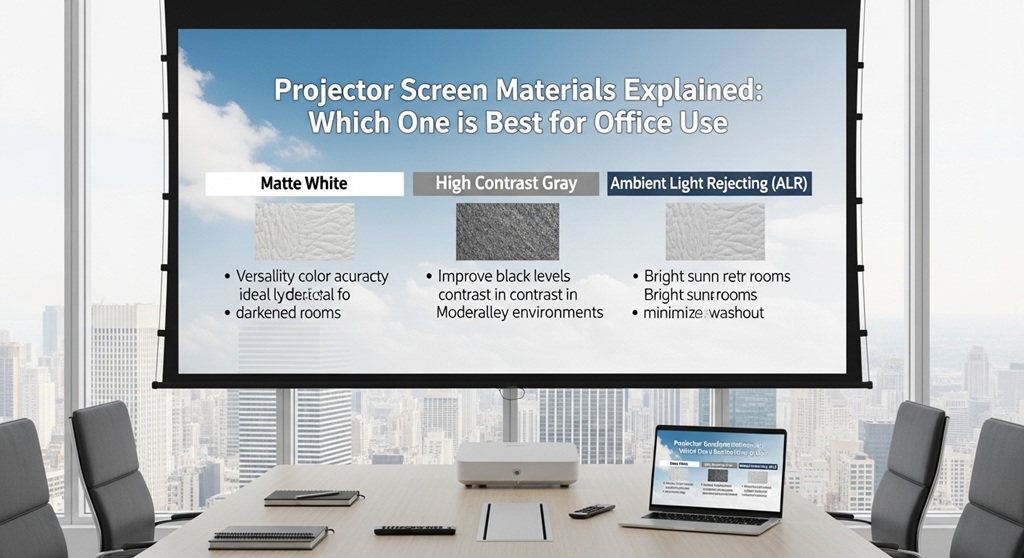
When it comes to choosing the right projector screen for your office, understanding the different types of materials available is crucial. The quality of your screen impacts the clarity of your presentations, meetings, and video conferences. But with so many options—matte white, glass bead, and ALR (ambient light rejection) screens—it can be tough to decide which one best suits your needs. In this article, we’ll break down each material type, so you can make an informed decision that enhances your office presentations.
What are the Different Types of Projector Screen Materials?
Projector screens come in various materials, each designed to deliver a unique viewing experience. The three most common types for office use are matte white, glass bead, and ALR screens. Here’s a quick breakdown:
- Matte White: A standard option, known for its balanced color reproduction and wide viewing angles.
- Glass Bead: Features small glass beads that enhance brightness and reflectivity, making it ideal for rooms with controlled lighting.
- ALR (Ambient Light Rejection) Screens: Designed to reject ambient light, making them perfect for rooms with high levels of natural or artificial light.
Now let’s dive deeper into the pros and cons of each material to help you determine the best choice for your office setting.
Why is Matte White the Most Common Choice for Office Projector Screens?
Matte white is the most common projector screen material because of its ability to deliver consistent, clear images without being overly bright or dim. This makes it an excellent choice for general office environments.
Advantages of Matte White:
- Wide Viewing Angles: Matte white screens maintain color accuracy and brightness across a wide viewing area, making it a good choice for offices where people might be sitting at different angles.
- Accurate Color Representation: Matte white screens reflect light evenly, ensuring that colors remain true to their source.
- Affordable: Compared to other materials, matte white screens are cost-effective, which is why they’re commonly used in offices with standard projector setups.
Disadvantages of Matte White:
- Ambient Light Sensitivity: Matte white screens can lose their brightness and contrast when exposed to ambient light, which can be a problem in brightly lit offices.
- Limited Brightness: While it offers good color accuracy, matte white doesn’t enhance brightness compared to other materials.
What is Glass Bead Screen Material and When Should You Use It?
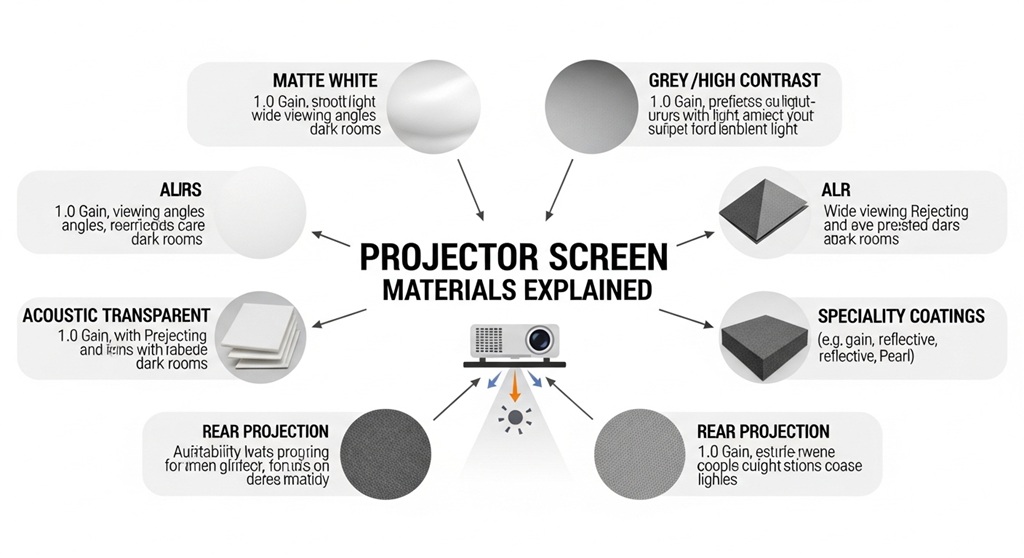
Glass bead screens feature tiny beads embedded in the screen material, which helps reflect light back towards the viewer, increasing brightness and clarity. This makes them ideal for situations where you need a bit more brightness in your office presentations.
Advantages of Glass Bead Screens:
- Increased Brightness: The beads reflect light more effectively, which boosts the brightness of your projection. This is especially useful in dimly lit rooms.
- Better Contrast: Glass bead screens can enhance contrast levels, providing a more vivid viewing experience.
- Sharp Image Quality: The reflective nature of the beads helps improve sharpness, making text and images clearer.
Disadvantages of Glass Bead Screens:
- Narrower Viewing Angle: The reflective beads are most effective when you’re directly in front of the screen. Viewing angles can be limited compared to matte white screens.
- More Expensive: Due to the additional materials and technology involved in making glass bead screens, they tend to be more expensive.
Why Choose an ALR Screen for Your Office?
ALR (Ambient Light Rejection) screens are designed to reject ambient light, making them the best choice for offices with a lot of natural or artificial lighting. These screens are engineered to ensure that projected images are bright and clear even in challenging lighting conditions.
Advantages of ALR Screens:
- Reduces Ambient Light Impact: ALR screens have a special coating that blocks light from other sources, making them perfect for offices with large windows or fluorescent lighting.
- Enhanced Brightness and Contrast: ALR screens deliver better brightness and contrast in rooms with more ambient light compared to matte white or glass bead screens.
- Vibrant Colors: Because they reject stray light, ALR screens can display more vivid colors and deeper blacks, resulting in better image quality.
Disadvantages of ALR Screens:
- Higher Cost: ALR screens are often more expensive due to their advanced technology, which may not be necessary for every office.
- Limited Viewing Angles: Some ALR screens have a narrower viewing angle, so you may need to sit directly in front of the screen to get the best image quality.
How Do You Choose the Right Projector Screen Material for Your Office?
The decision on which projector screen material to choose depends on several factors, including the lighting conditions in your office, the size of the room, and your budget. Here’s a quick guide to help you make the best choice:
- If your office has controlled lighting: A matte white screen may be your best option for its affordable cost and balanced performance.
- If you need a brighter image in a dimly lit room: A glass bead screen can enhance the brightness of your projector’s output, making it ideal for rooms that don’t get much light.
- If your office is filled with natural light or bright overhead lights: An ALR screen will help reject the excess light, allowing you to maintain image clarity and color accuracy.
What Are the Key Considerations When Choosing a Projector Screen?
Here are a few more things to keep in mind as you select the right screen:
- Screen Size: Make sure the size of the screen fits the size of your room. A screen that’s too big or too small can affect the viewing experience.
- Viewing Distance: Consider how far people will be sitting from the screen. Larger screens may be better for larger rooms, while smaller screens might be sufficient for smaller spaces.
- Budget: While matte white screens are affordable, glass bead and ALR screens come with a higher price tag due to their added features.
Conclusion: Which Projector Screen is Right for Your Office?
Ultimately, the best choice for your office depends on your unique requirements.
If you’re looking for clear, vibrant images for presentations, video conferences, or meetings, selecting the right screen material is essential. Choose wisely to ensure a professional and engaging experience for your team and clients. Ready to upgrade your office projector screen? Contact us today to explore the best options for your workspace!
Frequently Asked Questions
1. What’s the difference between matte white and glass bead projector screens?
Matte white screens offer a more balanced and natural image with wide viewing angles, while glass bead screens enhance brightness and contrast due to the reflective beads, making them ideal for dimly lit rooms.
2. Can ALR screens work well in dark rooms?
ALR screens are designed to reject ambient light, so they’re most effective in bright rooms. In dark rooms, matte white or glass bead screens might perform better.
3. How much more expensive are glass bead and ALR screens compared to matte white?
Glass bead and ALR screens are generally more expensive due to their advanced features. The price difference depends on screen size and brand, but expect to pay 20-50% more for these materials compared to matte white screens.
4. Do all ALR screens have a narrow viewing angle?
Not all ALR screens have narrow viewing angles, but many do. It’s important to check the specifications before purchasing to ensure it meets your needs for wide viewing angles.
5. Is it worth investing in an ALR screen for a conference room?
If your conference room has high levels of ambient light, investing in an ALR screen will greatly enhance visibility and image quality. For rooms with controlled lighting, matte white or glass bead may be sufficient
Read More Also: How to Choose a Portable Office Projector for Business Travel
Find out: How to Sell a Business Online Using Digital Marketplaces Safely
