
Many small businesses buy all sorts of equipment to aid them in their work. Where these items are bought through the business, they can generally be treated as a deduction from the taxable profits of the business in the year of expenditure. However, the exact amount that can be claimed and in what tax year can be complex and lead to many owner managed businesses claiming incorrectly.
What Counts As Qualifying Equipment
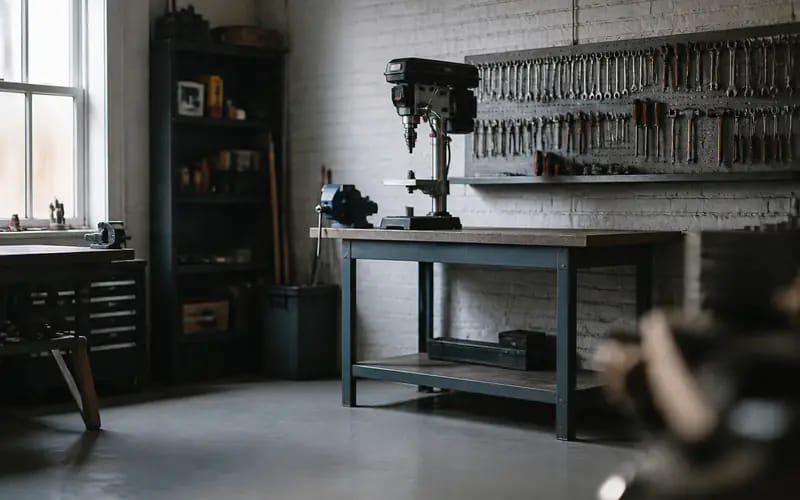
Capital allowances can be claimed on the purchase of plant and machinery, which includes items such as computers, tools, vans, manufacturing equipment and office furniture and also includes fittings to shops and certain items fixed into buildings such as air conditioning units. Importantly stock is not considered to be plant and machinery but the shelves used to store it are.
Using The Annual Investment Allowance
Most businesses can claim the full cost of qualifying equipment purchased in the same financial year in which purchased. A cap of £1m is placed on the Annual Investment Allowance for most businesses (the ‘small parts’ of large projects can be treated separately). Thus £15k of new machinery can be fully deducted from the taxable profit of the business in the same year it is purchased for £15k. This is likely to be the single most valuable allowance for small businesses and thus it is wise to check if it is available first.
When Full Expensing Or First Year Allowances Apply
Limited companies can make use of full expensing of new plant and machinery (not second-hand items). Full expensing allows 100% capital allowances in the year of purchase with no upper limit. There are also special situations where a 50% first-year allowance is available on new plant and machinery such as certain integral features in buildings. However, these reliefs are only available to companies and not to sole traders and partners. Check the relevant category before assuming that full expensing will apply. It is also worth checking the specific circumstances of a purchase before finalising your return.
Keeping The Right Records
You must have some proof that you have purchased the equipment and that it is used in your business. For example, an invoice with the date of purchase on it will be necessary. Also, you must have proof that the item has been put into use in your business within a certain time frame. The exception to this is for things that are also used for personal reasons. Here you must calculate a fair business use percentage of the total cost and only claim that portion of the allowance. For example, a sole trader who purchases a van that is used 80% for business reasons and 20% for personal reasons would claim 80% of the allowance for that van. These calculations must be written down with the invoice in order to provide evidence of a claim at a later date.
Writing Down Allowances And Pooling
Special rules apply to items which do not receive 100% AIA relief such as equipment costing more than the AIA allowance and certain ‘plant and machinery items’. For businesses purchasing equipment within these special rules, items receive a writing down allowance of 18% on the annual reducing balance of the ‘main pool’ of plant and machinery and 6% on the annual reducing balance of ‘long life assets’ and ‘integral features’. The entire main pool is written down each year at the applicable percentage, the pool reducing by the applicable percentage on each item until the balance is small enough to be fully written off in one year.
Special Rules For Cars
Special rules apply to cars. The AIA or allowance of 100% first year allowance does not apply to cars, but there are special rates available depending on the cars’ CO2 emissions. Zero-emission cars and cars with low emissions can qualify for 100% first year allowance, whilst higher-emission cars can only be claimed using the normal writing down allowances of between 4% and 6%. So, for example, brand new electric or hybrid vans and cars can be written off in their entirety in the first year, whereas new petrol based cars will be written off over a longer period at a lower rate.
Timing Purchases Around Your Year End
There are some exceptions to these rules however. Specifically the allowances can be claimed against the accounting period in which the equipment is purchased and is in use by your business for part of that period. For example, if you buy a new machine in March, you can claim the allowances for that year, rather than waiting until April when the new financial year starts. Equally, however, don’t purchase unnecessary equipment just to get tax allowances for it.
Why Accurate Claims Matter
You can reduce the taxable profit on which you pay Corporate Tax by making proper claims for capital allowances. These will decrease your tax liability if you claim properly, but will increase it if you claim less than you are allowed to. Conversely, claims over and above the allowable amount could attract interest and penalties on top of the overclaimed amount.
Claiming capital allowances is not difficult if you can categorise your expenditures into the various types of equipment and know the current rates of the allowances. Keeping good records of purchases as you go along will also help to avoid a major headache at the end of the year.
