
Market share dominates boardroom discussions about business unit performance. However, this single metric provides an incomplete picture of strategic effectiveness. Companies relying solely on market share miss critical indicators of long-term sustainability, customer value, and competitive positioning.
Modern business leaders need comprehensive measurement frameworks that capture strategic success across multiple dimensions. This guide explores proven methods for evaluating business unit strategy beyond traditional market share metrics.
Understanding the Limitations of Market Share
Market share measures your portion of total industry sales. This metric indicates competitive position but reveals little about profitability or strategic health. Additionally, market share can increase while margins erode, creating false success signals.
High market share doesn’t guarantee financial performance. Companies can gain share through unsustainable pricing or excessive spending. Therefore, leaders must examine underlying drivers of market position rather than the percentage alone.
Market definitions also complicate share measurements. Narrow market definitions inflate share percentages, while broad definitions diminish them. Furthermore, emerging markets and rapidly changing industries make historical comparisons unreliable.
Customer quality matters more than quantity in many industries. Acquiring unprofitable customers increases share but destroys value. Consequently, businesses need metrics distinguishing between valuable and detrimental growth.
Measuring Customer Lifetime Value and Retention
Customer lifetime value calculates total profit expected from customer relationships. This metric reveals whether your business unit attracts valuable, loyal customers or churns through unprofitable accounts. Higher lifetime value indicates effective targeting and service delivery.
Calculate lifetime value by multiplying average purchase value, purchase frequency, and customer lifespan. Subtract acquisition and service costs for net customer value. Moreover, segment analysis shows which customer types generate superior returns.
Retention rates measure how successfully you maintain customer relationships. High retention indicates satisfaction, switching costs, and competitive differentiation. Additionally, retention costs typically run lower than acquisition, making loyal customers more profitable.
Track cohort retention to identify trends over time. Compare retention rates across customer segments, acquisition channels, and product lines. However, consider industry benchmarks when setting retention targets, as acceptable rates vary dramatically.
Net Promoter Score gauges customer loyalty through willingness to recommend your business. This simple metric correlates with growth and profitability across industries. Therefore, tracking NPS alongside retention provides deeper insight into customer relationship health.
Evaluating Financial Performance Metrics
Return on invested capital shows how efficiently your business unit generates profits from capital employed. ROIC exceeding your cost of capital creates shareholder value regardless of market share. This metric reveals strategic effectiveness in resource allocation.
Calculate ROIC by dividing net operating profit after taxes by invested capital. Compare results against competitors and your weighted average cost of capital. Additionally, trend analysis shows whether strategic initiatives improve capital efficiency over time.
Economic profit measures absolute value creation by subtracting capital costs from operating profit. Unlike accounting profits, economic profit considers opportunity costs of invested resources. Consequently, positive economic profit confirms genuine value creation.
Gross margin trends indicate pricing power and competitive positioning. Improving margins suggest strengthening differentiation or operational efficiency. However, declining margins may signal commoditization or competitive pressure despite stable market share.
Operating cash flow conversion demonstrates how effectively profits translate into usable cash. Strong conversion indicates quality earnings and sustainable operations. Furthermore, cash flow funds growth investments without external financing.
Tracking Strategic Positioning Indicators
Brand strength metrics measure customer awareness, preference, and willingness to pay premiums. Strong brands command pricing power and customer loyalty independent of market share. Therefore, brand health predicts future competitive advantage.
Survey-based metrics like aided and unaided awareness track brand recognition. Purchase intent and consideration rates show whether awareness converts to preference. Additionally, price premium analysis reveals tangible brand value.
Product or service differentiation metrics assess competitive uniqueness. Customer surveys identifying reasons for purchase illuminate differentiation effectiveness. Meanwhile, feature parity analysis shows whether advantages sustain over time.
Innovation pipeline strength predicts future competitive position. Track research and development spending, patent filings, and new product revenue contribution. Moreover, time-to-market metrics indicate innovation efficiency.
According to Harvard Business Review, successful companies focus on creating customer value and building competitive advantages rather than obsessing over market share percentages.

Analyzing Operational Excellence Measures
Process efficiency metrics reveal operational effectiveness supporting strategy execution. Cycle times, defect rates, and productivity measures show whether operations enable competitive advantage. Additionally, efficiency improvements directly impact profitability.
Benchmark operational metrics against competitors and industry leaders. Identify performance gaps requiring attention and track improvement initiatives. However, avoid optimizing metrics that don’t support strategic objectives.
Supply chain resilience became critical during recent disruptions. Measure supplier diversification, inventory turns, and fulfillment reliability. Strong supply chains enable consistent customer service and cost management.
Employee engagement and productivity indicate organizational health. High engagement correlates with customer satisfaction, innovation, and financial performance. Therefore, workforce metrics provide leading indicators of strategic capability.
Quality metrics like defect rates and customer complaints signal operational excellence. Consistent quality builds reputation and reduces costs. Moreover, quality leadership often justifies premium pricing and customer loyalty.
Assessing Market Position Through Relative Metrics
Relative market share compares your share to your largest competitor’s share. This metric better indicates competitive strength than absolute share. Additionally, relative share correlates more strongly with profitability than absolute share.
Calculate relative share by dividing your market share by the leading competitor’s share. Values above one indicate market leadership. Furthermore, track relative share changes to identify competitive momentum shifts.
Share of customer wallet measures your portion of customers’ total spending in your category. High wallet share indicates customer preference and relationship strength. Therefore, wallet share often predicts retention and growth better than market share.
Win rate analysis tracks success in competitive sales situations. Measure wins against specific competitors and in defined customer segments. This metric reveals competitive positioning where it matters most.
Price realization compares actual selling prices to list prices. Strong price realization indicates value perception and negotiating effectiveness. However, declining realization may signal competitive pressure or weak differentiation.
Monitoring Strategic Initiative Progress
Balanced scorecard frameworks organize metrics across financial, customer, internal process, and learning perspectives. This comprehensive approach prevents overemphasis on any single dimension. Additionally, scorecards link operational metrics to strategic objectives.
Define 3-5 key performance indicators for each balanced scorecard perspective. Establish targets based on strategic goals rather than historical performance. Moreover, cascade scorecards throughout the organization for alignment.
Milestone achievement tracking ensures strategic initiatives progress as planned. Break major initiatives into measurable milestones with defined timelines. Therefore, leaders can identify and address delays early.
Resource allocation efficiency shows whether investments support strategic priorities. Compare spending across initiatives to strategic importance. Additionally, track return on strategic investments separately from routine operations.
According to McKinsey & Company, companies taking a long-term perspective outperform peers across multiple performance dimensions beyond short-term market share gains.
Evaluating Digital and Technology Metrics
Digital engagement metrics reveal online effectiveness increasingly critical across industries. Track website traffic, conversion rates, and digital channel revenue contribution. Moreover, mobile engagement indicates readiness for evolving customer preferences.
Technology adoption rates show how effectively your business unit leverages digital tools. Measure employee usage of productivity systems and customer adoption of digital services. However, focus on adoption driving business outcomes rather than technology for its own sake.
Data analytics capability metrics assess decision-making infrastructure. Track data quality, analytics tool usage, and data-driven decision percentages. Strong analytics capabilities enable faster, better strategic responses.
Cybersecurity and compliance metrics reduce strategic risk. Monitor security incidents, compliance violations, and audit findings. Additionally, vendor risk assessments protect against supply chain vulnerabilities.
Creating Custom Strategic Metrics
Industry-specific metrics capture unique strategic factors. Healthcare businesses track patient outcomes and readmission rates. Software companies measure user engagement and feature adoption. Therefore, identify metrics reflecting your industry’s value drivers.
Competitive intelligence metrics inform strategic positioning. Track competitor product launches, pricing changes, and strategic announcements. This information enables proactive rather than reactive strategy adjustments.
Stakeholder satisfaction extends beyond customers to employees, suppliers, and communities. Comprehensive stakeholder management supports long-term sustainability and license to operate. Furthermore, stakeholder goodwill provides strategic flexibility during challenges.
Leading versus lagging indicator balance ensures timely course corrections. Lagging indicators like revenue confirm past performance. Leading indicators like pipeline quality predict future results. Consequently, monitor both types for complete strategic visibility.
Implementing Effective Measurement Systems
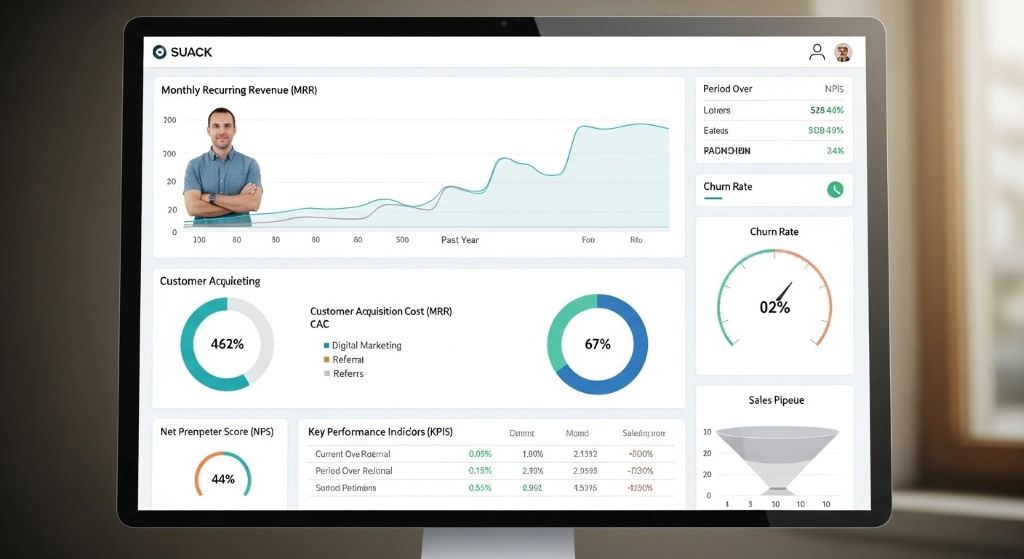
Dashboard design consolidates critical metrics for easy monitoring. Visual displays reveal trends and exceptions quickly. Additionally, drill-down capabilities let leaders investigate concerning patterns.
Reporting cadence matches metric volatility and decision cycles. Review fast-moving operational metrics weekly or daily. Examine strategic positioning indicators monthly or quarterly. However, avoid analysis paralysis from excessive reporting.
Accountability assignment ensures metric ownership and action. Designate responsible executives for each strategic metric. Clear ownership drives attention and improvement initiatives.
External benchmarking provides context for internal metrics. Industry associations, research firms, and peer groups offer comparative data. Therefore, combine internal trends with external comparisons for complete assessment.
Conclusion
Measuring business unit strategy effectiveness requires looking beyond market share to comprehensive performance indicators. Customer lifetime value, financial returns, strategic positioning, operational excellence, and digital capabilities provide multidimensional insight into strategic health. Additionally, balanced scorecards and custom metrics ensure measurement systems align with specific strategic objectives. Therefore, leaders should implement robust measurement frameworks tracking leading and lagging indicators across financial and non-financial dimensions. This comprehensive approach enables data-driven strategy refinement and sustainable competitive advantage. Ultimately, businesses succeeding long-term measure what matters most, not just what’s easiest to track.
Frequently Asked Questions
What metrics should replace market share as primary strategy indicators?
No single metric should replace market share. Instead, use balanced frameworks including customer lifetime value, return on invested capital, brand strength, operational efficiency, and innovation metrics. This combination provides comprehensive strategic insight across financial and non-financial dimensions.
How often should business units review strategic effectiveness metrics?
Review operational metrics weekly or monthly, financial metrics monthly or quarterly, and strategic positioning indicators quarterly or annually. However, adjust frequency based on industry dynamics and business volatility. Fast-changing markets require more frequent strategic reviews.
Can small business units use these measurement approaches?
Yes, these principles apply to businesses of all sizes. Small units may use simplified versions focusing on 5-10 core metrics rather than comprehensive dashboards. Additionally, free tools and basic analytics provide sufficient capability for effective measurement.
How many metrics should a business unit track simultaneously?
Track 15-25 core metrics organized across balanced scorecard perspectives. Too few metrics miss important dimensions, while too many create confusion and dilute focus. Therefore, prioritize metrics directly linked to strategic objectives and competitive advantage.
What’s the biggest mistake companies make measuring strategy effectiveness?
Focusing exclusively on short-term financial metrics like quarterly revenue while ignoring leading indicators of future performance. Additionally, measuring outputs like market share without understanding underlying drivers like customer satisfaction, innovation, and operational excellence creates incomplete strategic visibility.
Relared Topics:
