
11×17 copy paper for professional printing is the standard choice for businesses, architects, designers, educators, and print shops that need larger layouts, sharper readability, and clean presentation quality. Also called tabloid paper, ledger-size sheets provide more design space than standard letter paper while supporting detailed graphics, spreadsheets, brochures, booklets, engineering plans, and marketing materials.
Most printing problems are not caused by printers. They start with wrong paper size selection. Tiny charts become unreadable. Folded brochures lose alignment. Colors bleed on lightweight stock. Presentation documents look cramped. Businesses spend money on premium printing equipment but overlook one critical factor: choosing the right ledger-size paper.
That mistake becomes expensive when client presentations, product catalogs, restaurant menus, architectural drawings, or educational charts fail to look polished. A poorly selected paper stock can reduce print clarity, weaken color accuracy, and create feeding issues during high-volume production.
This guide explains how to choose the right 11×17 copy paper, what paper weight works best, when to use tabloid paper, and how professional printers select ledger-size stock for commercial-quality results.
What is ledger-size paper?
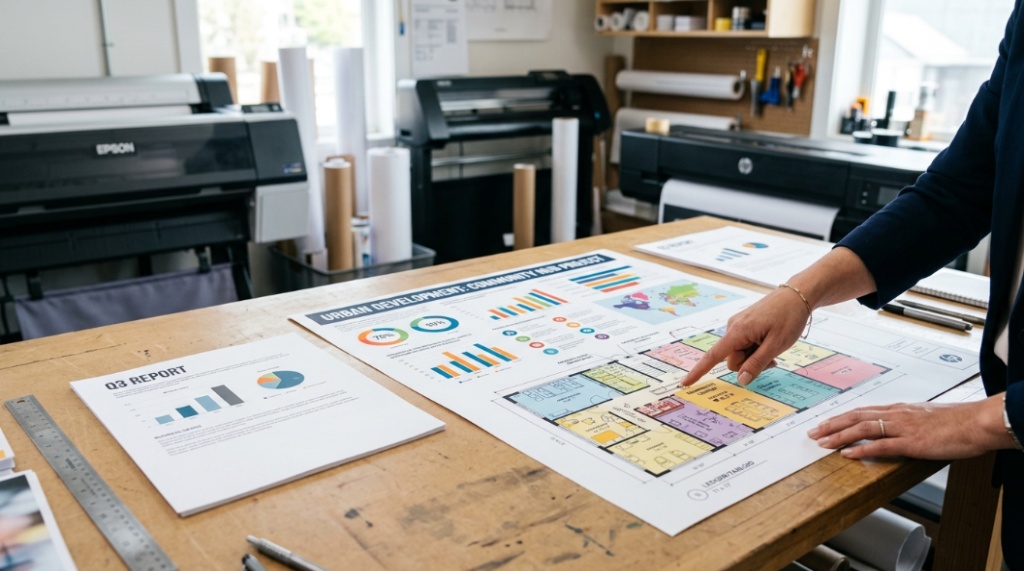
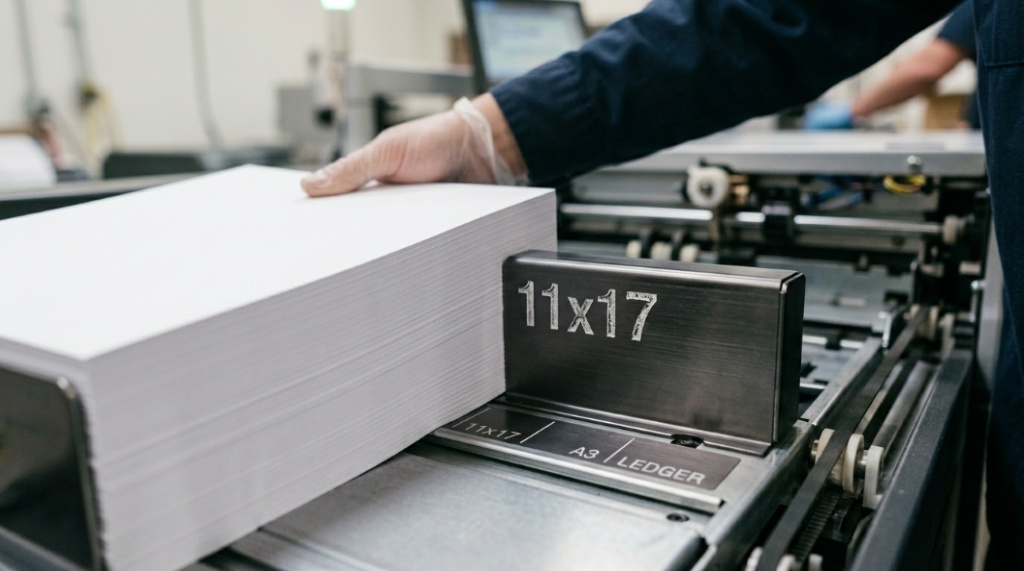
Ledger-size paper is an 11 x 17-inch sheet commonly used for professional printing, large-format layouts, presentations, spreadsheets, and design work.
Ledger paper and tabloid paper share identical dimensions but differ based on orientation:
- Ledger format: Landscape orientation
- Tabloid format: Portrait orientation
The paper measures:
- 11 inches wide
- 17 inches tall
- 279 x 432 mm
Compared with standard letter paper (8.5 x 11), ledger-size sheets provide nearly double the printable workspace. That extra space improves readability, visual hierarchy, and design flexibility.
Where is tabloid paper commonly used?
Tabloid paper is widely used for commercial documents that require larger layouts and detailed visuals.
- Architectural blueprints
- Restaurant menus
- Booklets
- Product catalogs
- Business reports
- Engineering diagrams
- Event posters
- Educational charts
- Presentation handouts
- Newspaper inserts
Why is 11×17 copy paper preferred for professional printing?
11×17 copy paper improves readability, layout flexibility, and print presentation compared with smaller paper formats.
Professional printing relies heavily on spacing and visual clarity. Larger paper allows designers to avoid overcrowded layouts. Charts stay readable. Images maintain resolution. Typography breathes naturally.
According to commercial print industry studies, oversized layouts improve information retention during presentations because viewers can process charts and diagrams more easily.
Businesses choose ledger-size stock because it supports:
- High-resolution graphics
- Wide spreadsheets
- Two-page booklet spreads
- Detailed CAD drawings
- Foldable brochures
- Large typography
- Presentation visuals
Professional print shops also prefer tabloid paper because many digital production printers are optimized for 11×17 workflows.
How do you choose the right paper weight for tabloid paper?
Paper weight determines durability, print sharpness, folding quality, and overall professional appearance.
Choosing the wrong paper weight is one of the biggest mistakes in commercial printing.
| Paper Weight | Best Use | Professional Quality Level |
|---|---|---|
| 20 lb | Basic office printing | Standard |
| 24 lb | Reports, presentations | Professional |
| 28 lb | Marketing materials | Premium |
| 32 lb | High-end brochures | Luxury quality |
| 65–100 lb Cover | Menus, postcards, covers | Commercial-grade |
What paper weight works best for everyday office printing?
24 lb ledger paper provides the best balance between cost, print clarity, and durability.
It reduces ink bleed, feels more substantial than standard office paper, and performs well in laser printers and inkjet systems.
What paper weight works best for brochures and marketing?
28 lb to 32 lb paper creates sharper image reproduction and stronger color consistency.
Marketing materials often include heavy graphics and saturated colors. Lightweight paper can wrinkle or absorb ink unevenly.
Should you choose coated or uncoated 11×17 copy paper?
Coated paper works best for vibrant image-heavy printing, while uncoated paper is better for readability and writing.
When should coated tabloid paper be used?
Coated stock improves color vibrancy and image sharpness.
Best uses include:
- Product catalogs
- Photography prints
- Retail flyers
- Restaurant menus
- Real estate brochures
- Magazine-style layouts
Gloss and silk coatings prevent excessive ink absorption, producing cleaner graphics.
When should uncoated ledger-size paper be used?
Uncoated paper improves readability and supports handwriting.
Best uses include:
- Business reports
- Training materials
- Educational documents
- Blueprint annotations
- Presentation handouts
- Office spreadsheets
Many professional offices prefer uncoated stock because it creates less glare under conference-room lighting.
Which printer types support ledger-size paper?
Not all printers support 11×17 copy paper, so compatibility must be checked before purchasing paper stock.
Ledger-size printing requires wide-format support or tabloid-capable paper trays.
What printers commonly support tabloid paper?
- Wide-format inkjet printers
- Commercial laser printers
- Production digital presses
- Architectural plotters
- Multifunction office copiers
Popular business printer brands supporting ledger-size formats include:
- HP
- Canon
- Epson
- Brother
- Xerox
- Ricoh
- Konica Minolta
How can you check printer compatibility?
Look for “11×17,” “tabloid,” or “ledger-size support” in printer specifications.
Some printers support manual-feed ledger printing but lack automatic tray support. That difference matters for bulk production.
What brightness level is best for professional printing?
Brightness affects contrast, readability, and color appearance in printed materials.
Paper brightness is measured on a scale from 1 to 100.
| Brightness Rating | Print Appearance | Best Use |
|---|---|---|
| 92–94 | Standard white | Internal office use |
| 96–98 | Bright white | Professional reports |
| 100+ | Ultra-bright premium white | Marketing graphics |
What brightness should businesses choose?
96–100 brightness paper delivers the best professional appearance for most business applications.
Higher brightness improves:
- Text contrast
- Image sharpness
- Color vibrancy
- Presentation quality
Is recycled ledger-size paper good for professional printing?
Modern recycled tabloid paper can deliver professional-quality printing while supporting sustainability goals.
Recycled office paper quality has improved significantly over the last decade. Many FSC-certified and post-consumer recycled papers now perform similarly to virgin-fiber stock.
Businesses focused on environmental branding increasingly choose recycled ledger paper for:
- Corporate reports
- Sustainability presentations
- Educational materials
- Conference handouts
Does recycled paper reduce print quality?
High-quality recycled paper generally performs well for text and moderate graphics.
However, ultra-premium photography and luxury marketing materials may still benefit from coated virgin-fiber stock.
How does paper grain direction affect folding and booklet printing?
Paper grain direction affects folding smoothness, cracking resistance, and booklet durability.
This detail is often ignored outside professional print shops.
Paper fibers align in one primary direction during manufacturing. Folding against grain direction can cause cracking, especially on coated paper.
Why does grain direction matter for tabloid booklets?
Correct grain alignment creates smoother folds and cleaner booklet spines.
For saddle-stitched booklets and folded brochures, printers usually prefer grain running parallel to fold direction.
This becomes especially important for:
- Restaurant menus
- Event programs
- Annual reports
- Booklets
- Presentation folders
What finish works best for professional tabloid paper printing?
Paper finish affects visual texture, readability, and branding perception.
What is glossy finish paper?
Glossy paper creates vibrant colors and high image contrast.
Best for:
- Photography
- Luxury brochures
- Retail promotions
- Fashion catalogs
What is matte finish paper?
Matte paper reduces glare and improves readability.
Best for:
- Business presentations
- Corporate reports
- Educational printing
- Conference materials
What is silk or satin finish paper?
Silk finish balances readability and image quality.
Many professional marketers prefer satin stock because it provides premium appearance without heavy glare.
How much does 11×17 copy paper cost?
Ledger-size paper costs more than standard office paper because of larger dimensions and specialized manufacturing.
| Paper Type | Estimated Price Range | Typical Use |
|---|---|---|
| 20 lb standard | Low cost | Office printing |
| 24 lb premium | Moderate | Business reports |
| 32 lb bright white | Higher | Marketing materials |
| Gloss coated stock | Premium pricing | Commercial graphics |
Bulk purchasing significantly reduces per-sheet cost for businesses with high monthly print volume.
What mistakes should businesses avoid when choosing tabloid paper?
Most professional printing issues happen because businesses choose paper based only on price.
Common ledger-paper mistakes include:
- Using thin paper for graphics-heavy designs
- Ignoring printer compatibility
- Choosing low brightness stock
- Selecting glossy paper for text-heavy reports
- Using wrong grain direction for folding
- Buying cheap coated stock with poor ink absorption
- Ignoring paper opacity
Why does opacity matter?
Opacity reduces show-through from printing on opposite sides.
Low-opacity paper creates distracting bleed-through during duplex printing.
How do professionals choose ledger paper for different industries?
Professional printers select tabloid paper based on industry-specific performance needs.
| Industry | Recommended Paper Type | Reason |
|---|---|---|
| Architecture | 24 lb matte | Readable technical drawings |
| Marketing | 32 lb gloss | Vibrant graphics |
| Education | 24 lb uncoated | Annotation-friendly |
| Corporate | 28 lb bright white | Professional presentations |
| Retail | Gloss coated stock | Visual impact |
Can 11×17 copy paper improve business branding?
Yes. Larger professional layouts improve perceived quality, readability, and brand authority.
Customers often associate print quality with business credibility. Premium paper signals professionalism before readers even process content.
High-quality tabloid printing helps businesses:
- Increase presentation impact
- Improve customer trust
- Enhance visual storytelling
- Support premium pricing perception
- Create stronger first impressions
Luxury hotels, restaurants, architecture firms, law firms, and real estate agencies frequently use ledger-size presentations because larger layouts feel more polished and easier to review.
Conclusion: How do you pick the right ledger-size paper for professional printing?
The best 11×17 copy paper depends on print purpose, printer compatibility, paper weight, brightness, finish, and durability requirements.
For everyday professional office use, 24 lb bright white uncoated paper delivers reliable performance and excellent readability. For marketing materials and premium graphics, coated 28–32 lb tabloid paper creates stronger visual impact and cleaner color reproduction.
Businesses that invest in quality ledger-size stock usually experience better presentation results, smoother print workflows, and more professional-looking materials. Small details like brightness rating, opacity, grain direction, and finish can dramatically affect final output quality.
Before purchasing paper, evaluate:
- Printer compatibility
- Document purpose
- Ink coverage
- Folding requirements
- Audience expectations
- Brand presentation goals
Choosing the right tabloid paper is not just a technical decision. It directly affects readability, design quality, customer perception, and overall printing performance.
FAQ: 11×17 Copy Paper and Tabloid Paper
Is 11×17 paper the same as tabloid paper?
Yes. Both refer to paper measuring 11 x 17 inches. “Ledger” usually describes landscape orientation, while “tabloid” refers to portrait orientation.
What is 11×17 copy paper used for?
11×17 copy paper is commonly used for presentations, spreadsheets, brochures, engineering drawings, posters, menus, and booklets.
Can regular printers print on tabloid paper?
No. Only printers with ledger-size or tabloid-size support can print on 11×17 paper. Always check printer specifications before purchasing paper.
What is the best paper weight for professional printing?
24 lb to 32 lb paper works best for professional printing. Lighter stock suits office use, while heavier paper improves premium presentation quality.
Should I use glossy or matte ledger paper?
Glossy paper is better for graphics and photography, while matte paper improves readability for reports and text-heavy documents.
Does brighter paper improve print quality?
Yes. Higher brightness paper improves contrast, color sharpness, and overall visual clarity. Most professional businesses use brightness ratings between 96 and 100.
Is recycled 11×17 paper suitable for business printing?
Yes. High-quality recycled ledger paper performs well for reports, presentations, and educational printing while supporting sustainability goals.
📌 Related Reads
Discover: Best Recycled Paper for Eco-Friendly Offices
Explore: How to Understand Real Estate Flipping and Build a Profitable Property Business
