

Anyone who has cut a few cords of firewood knows the frustration: the saw starts fine in the driveway, then refuses to idle after an hour of bucking logs. Understanding what makes a 2-stroke chainsaw different goes a long way toward preventing that headache. Unlike a four-stroke engine, a 2-stroke design fires on every revolution, which is why it delivers so much torque for its weight. That power-to-weight ratio is also why most heavy-duty gas chainsaws for firewood in Michigan rely on 2-stroke engines. This article explains how they work, what makes them different, and how to keep one running cleanly.
Quick Answer
A 2-stroke chainsaw is a gas-powered saw whose engine completes a full power cycle in two piston strokes instead of four. Fuel and air enter, get compressed, combust, and exit in a single up-and-down movement of the piston. The result is a lighter, simpler, higher-revving engine that delivers strong cutting power, but it requires oil mixed into the fuel rather than a separate oil sump.
Key Takeaways
- A 2-stroke engine fires once per crankshaft revolution, so it produces roughly twice as many power pulses as a 4-stroke of similar displacement.
- It has no separate crankcase oil; lubrication comes from oil mixed into gasoline, usually at a 50:1 ratio for modern saws.
- Two-stroke saws are lighter, simpler, and cheaper to build, but they burn dirtier and are louder than four-stroke alternatives.
- Most starting and idling problems trace back to stale fuel, the wrong mix ratio, or a dirty air filter—not the engine itself.
How a 2-Stroke Engine Actually Works
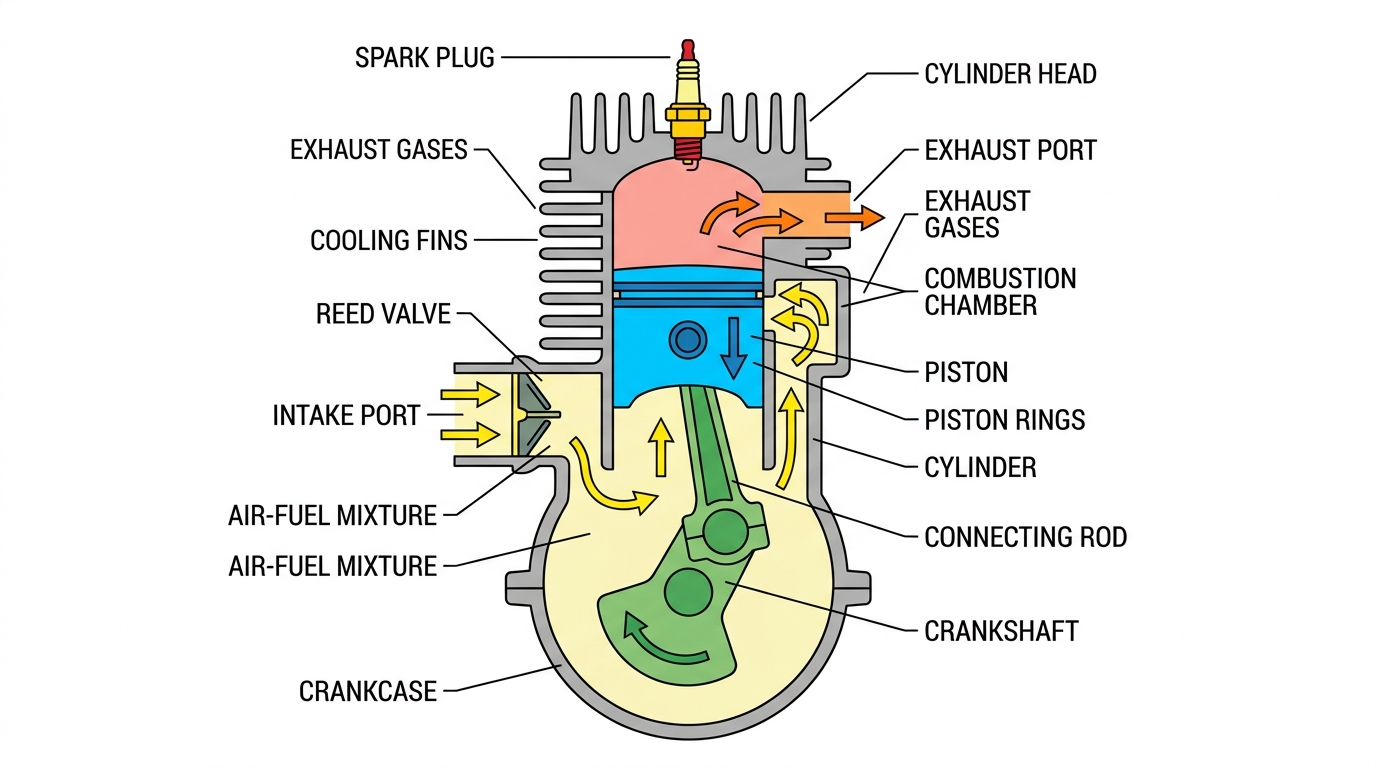
In a 2-stroke engine, every movement of the piston does double duty. On the upward stroke, the piston draws a fresh fuel-air charge into the crankcase from the carburetor while compressing the charge already sitting in the combustion chamber. At the top of that stroke, the spark plug ignites the compressed mixture. The expanding gas drives the piston down, and as it descends, it uncovers ports that let the exhaust escape and the new charge rush up from the crankcase into the cylinder. Then the cycle repeats. That’s why a 2-stroke fires on every crankshaft revolution—twice as often as a 4-stroke, which has separate intake, compression, power, and exhaust strokes.
Why Oil Goes in the Gas
Because the crankcase is part of the intake path, a 2-stroke engine can’t hold a pool of oil the way a car engine does. Instead, oil is mixed with the gasoline itself and travels through the engine, coating the cylinder wall, piston rings, and bearings as it goes. Modern saws typically call for a 50:1 gasoline-to-oil ratio, though some older or high-performance models specify 40:1 or 32:1. Using straight gasoline will seize the engine in minutes; using too much oil causes carbon buildup, fouled plugs, and heavy exhaust smoke.
The Role of the Carburetor and Recoil Starter
The carburetor blends gasoline and air in roughly the right proportion before the mix enters the crankcase. Chainsaws use a tiny diaphragm carburetor that can operate at any angle—upright, sideways, or upside down—because loggers frequently cut in awkward positions. The recoil starter spins the flywheel until the first combustion occurs, and once the engine is running, the magneto keeps the spark timed without a battery.
Why Firewood Cutters Prefer 2-Stroke Saws
Weight and torque are the practical reasons. A 2-stroke engine produces more power per pound than a 4-stroke of the same displacement because it has fewer moving parts—no camshaft, no valves, no oil pump. On a 20-inch bar saw bucking hardwood, that translates to a lighter tool you can carry through a woodlot for hours. The trade-off is noise, exhaust smell, and the need to mix fuel before every session.
2-Stroke vs. 4-Stroke Chainsaws
The comparison matters most when you’re choosing a saw for ongoing firewood work rather than occasional pruning.
| Factor | 2-Stroke | 4-Stroke |
|---|---|---|
| Power per pound | Higher | Lower |
| Fuel handling | Pre-mix gas and oil | Straight gasoline |
| Maintenance complexity | Simple, fewer parts | More parts, valve adjustments |
| Emissions and smell | Higher, noticeable exhaust | Cleaner, quieter |
| Typical use | Firewood, felling, limbing | Occasional trimming, cleaner running |
For heavy firewood production, the 2-stroke’s lighter weight and higher revs usually win. For a homeowner who cuts a few branches a year, a battery or 4-stroke saw may be less hassle.
What Makes a Saw “Heavy-Duty”
Displacement, bar length, and build quality separate a firewood saw from a trim saw. A 60cc-class engine paired with a 20-inch bar handles hardwood bucking without bogging down. Larger displacement usually means more torque for felling larger trees, while a smaller saw is easier to handle for limbing and brush. Matching displacement to the wood you actually cut matters more than chasing the biggest number on the spec sheet.
Common 2-Stroke Problems and What Causes Them
Most 2-stroke chainsaw failures aren’t sudden—they build from fuel handling and maintenance shortcuts.
- Won’t start after sitting: Ethanol in pump gasoline absorbs water and degrades, leaving gum in the carburetor. Fuel older than 30 days is a common culprit.
- Idles rough or stalls: Usually a clogged air filter, a misadjusted idle screw, or a spark arrestor screen packed with carbon.
- Loses power under load: Often a dull chain, a restricted exhaust, or the wrong fuel mix. A dull chain is the most frequently overlooked cause.
- Excessive smoke and carbon: Too much oil in the mix or a carburetor running rich.
- Seized piston: Almost always straight gasoline or a mix that was too lean.
Fuel Mixing and Storage Basics
Use fresh gasoline with the correct ratio of 2-stroke oil designed for air-cooled engines. Measure with a mixing bottle rather than eyeballing; small errors matter. If you won’t use mixed fuel within a month or two, either buy ethanol-free gas or use a fuel stabilizer made for small engines. Store the saw with the tank empty or full of treated fuel—never leave a partially filled tank of untreated gas over winter. Before a long idle period, run the carburetor dry by starting the saw and letting it stall with the choke closed, Before handling heavy timber or managing your workspace waste, check out our guide on how to choose the best office paper shredder in ca.
A Realistic Michigan Cutting Scenario
A Michigan firewood cutter running a 62cc saw through oak and maple in November faces cold-start challenges: fuel doesn’t vaporize as readily below freezing, and older saws may need a few extra pulls with the choke engaged. Letting the saw warm for 30–60 seconds before cutting keeps it from stalling under load. Sharpening the chain after every tank extends bar life and reduces engine strain, which matters when you’re processing several cords in a single weekend.
Frequently Asked Questions
Can I use regular gasoline in a 2-stroke chainsaw?
Yes, but it must be mixed with the correct ratio of 2-stroke oil first. Straight gasoline will destroy the engine within minutes because there is no oil sump to lubricate the moving parts.
What happens if I mix too much oil in the fuel?
The engine will run smoky and foul the spark plug. Over time, excess oil leaves carbon deposits in the exhaust port and on the piston crown, which reduces performance and can eventually cause the engine to seize.
How long can I store mixed 2-stroke fuel?
Untreated pump gasoline begins to degrade within 30 days. Treated fuel or ethanol-free gasoline can last several months. Stale fuel is one of the most common reasons a stored saw won’t start.
Is a 2-stroke saw better than a battery saw for firewood?
For high-volume firewood cutting, yes. Gas 2-stroke saws run much longer between refueling and produce more sustained power. Battery saws suit lighter trimming or smaller homeowner tasks where quiet operation matters more than runtime.
How often should I clean the air filter?
Inspect it before every use and clean or replace it whenever it looks dirty or clogged. A restricted filter forces the engine to run rich, which causes rough idling and power loss.
Conclusion
A 2-stroke chainsaw fires on every revolution, mixes oil with gasoline for lubrication, and skips the valves and camshaft that make a 4-stroke heavier. That design gives it the power-to-weight edge that matters when you’re bucking cordwood. Keep the fuel fresh, mix it accurately, and maintain the air filter and chain, and the saw will stay reliable through a full season. If you’re choosing a saw for steady firewood work, prioritize displacement and bar length over cosmetic features, and treat fuel handling as the single biggest factor in long-term engine life.
